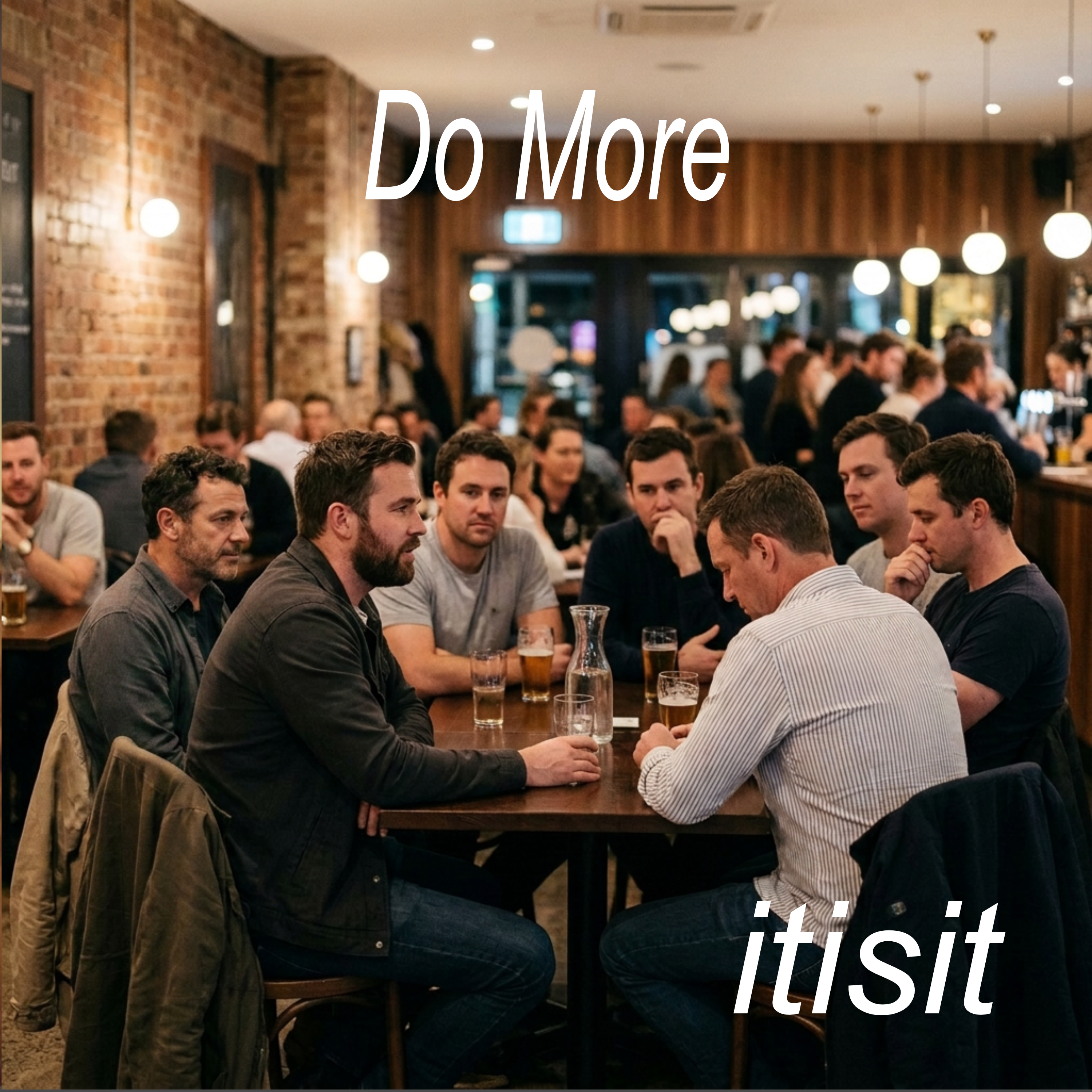
Do More
A call for men to move beyond quiet agreement — to call out disrespect when they see it and stand beside women in making equality real.


"Never meant to make respect conditional" — Do More
Plenty of good men talk about respect as something a woman earns, whether by proving herself on the job, keeping up with the banter, or being "one of the good ones". But if respect has to be earned from us, we're the ones handing it out. This piece looks at where that habit shows up in men's everyday lives, and what changes when respect becomes the starting point instead of the prize.
"She's earned my respect." Most of us have said it, or something like it, and meant it as a compliment. A new site supervisor who turns out to know her stuff. A mate's partner who can hold her own around the fire. A colleague who stayed back and got the job done.
It sounds generous. But underneath it sits the idea that respect was ours to hold back until she passed a test we set, and that before she proved herself, something less was fair enough.
Think about how it plays out. A young woman starts on a crew, and the blokes wait to see if she "can handle it": the language, the pace, the jokes. A man joining the same crew gets the benefit of the doubt on day one. She gets an audition that can run for months.
Or at the barbecue, when the talk turns to footy, cars or the mortgage, her opinion gets weighed a little more carefully than his would be. Nobody's being cruel. Somewhere along the way, we just started treating respect as a reward we hand out rather than a floor everyone stands on.
The problem isn't that we're bad men. The problem is that the test was never ours to set.
There's a fair distinction here. Admiration for skill, effort or character is something people do earn. You can be impressed by someone who's brilliant at their job and less impressed by someone who isn't.
Respect is different. It's the basic decency of being taken seriously: listened to, not talked over, not tested on whether you belong. That part isn't a prize. It's the starting point, and it's the same for her as it is for him.
When we blur the two, women end up working for something men get by default.
It doesn't take a speech. It's small and practical:
Give her the same day-one benefit of the doubt you'd give a new bloke.
Notice when you're waiting for her to "prove it", and ask whether you'd ask the same of him.
Drop "she's earned my respect" and say what you actually mean: "she's brilliant at this."
When someone else runs the test, with a snide question or an eye roll, be the one who doesn't join in.
None of this costs much. But it means we're no longer the ones deciding whether she belongs, a job that was never ours to begin with.
There's a song built around exactly this idea. Do More opens with "We were never meant to stand above / Never meant to make respect conditional", then asks men to move past quiet agreement and into action. If this piece made you think about the tests you've been running without noticing, it's worth a listen.
A call for men to move beyond quiet agreement — to call out disrespect when they see it and stand beside women in making equality real.

"I believe we're better than this" carries no evidence, no guarantee. This piece looks at why that belief has to lead the proof rather than follow it, and what it costs to say it out loud.
Read Story