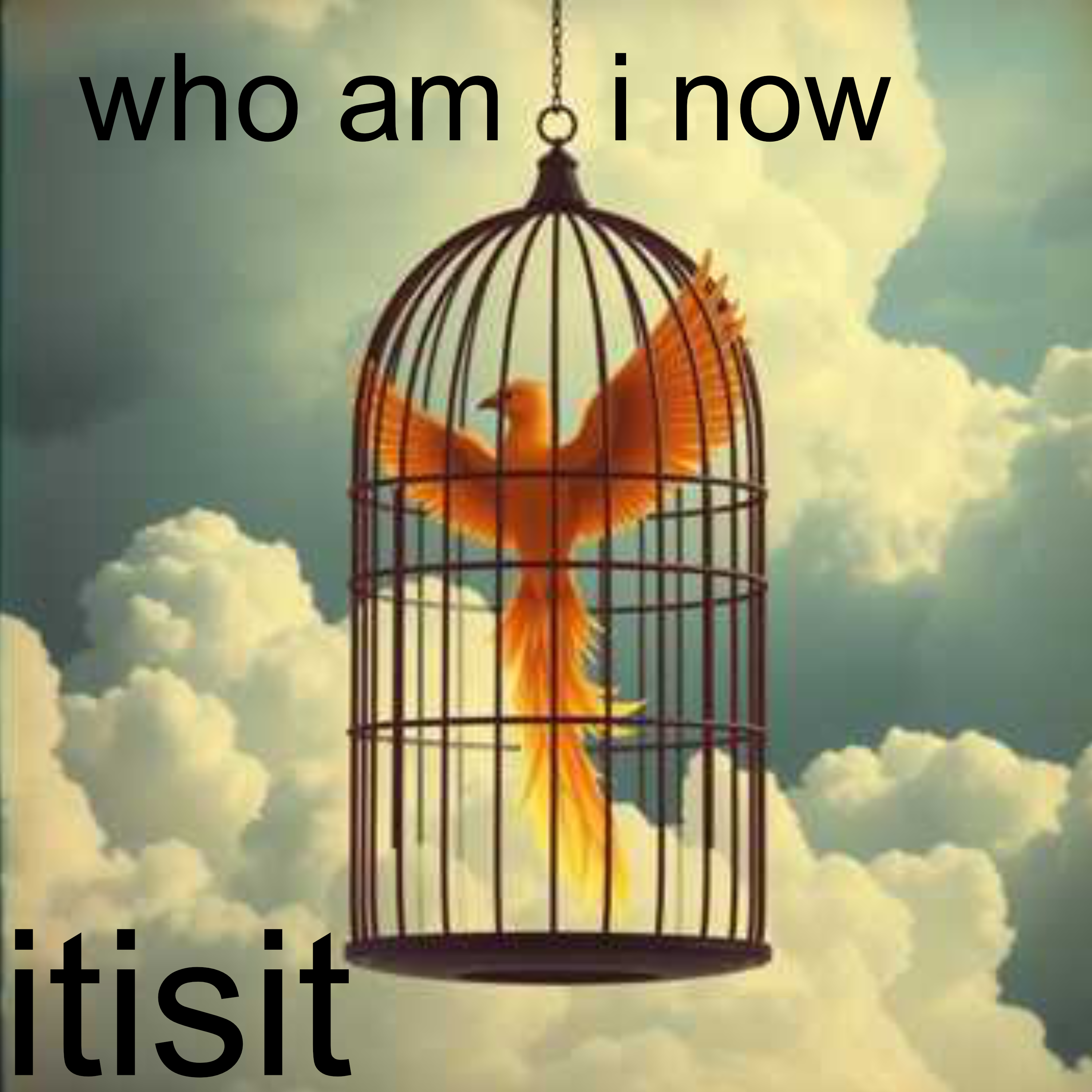
Who Am I Now
A searching song about masculine identity, changing roles and the courage to live more honestly.


"Provider, protector, the roles etched in stone / But love asks for more when we build a home / Egalitarian partner, voice that can cry" — Who Am I Now
Provider and protector didn't get chosen by most men — they got inherited, already carved in, before there was much say in the matter. What's actually new, and genuinely being chosen rather than handed down, is everything the song adds on top: equal partner, a voice that's allowed to crack.
Nobody sits a boy down and asks whether he'd like to be the provider and protector when he grows up — it's assumed, modelled, and reinforced long before he's old enough to have an opinion about it. By the time a man might want to question the role, he's often already been living inside it for decades.
The line doesn't say providing and protecting were wrong — it says love, in an actual home, asks for more than those two roles alone can offer. A relationship built only on provision and protection is missing the parts that require actually being present, not just useful.
Being an equal partner means giving up the automatic authority that came bundled with "protector" — not because protecting stops mattering, but because it stops being the only currency in the relationship. That's a genuine loss for some men, even when it's also clearly a gain.
Nothing about being a provider or protector actually forbids an emotional voice — the two were just never shown together often enough for it to seem like a real combination rather than a contradiction. Choosing it now means building the combination from scratch, without much of a template.
There's a song built around exactly this shift — from roles etched in stone to roles genuinely chosen, including the ones that ask for more. It's worth hearing in full: https://imale.com.au/listen/who-am-i-now
A searching song about masculine identity, changing roles and the courage to live more honestly.

Most men already agree, in the abstract, that the old model of stoic self-sufficiency doesn't quite fit anymore. What's missing is seeing the alternative modelled up close, often enough, to feel like a real option. This piece looks at why admission has to come before strength, not after.
Read Story
By the time most men are old enough to question "stand tall, never let it show," they've already been following it for a decade. This piece traces how the instruction gets absorbed rather than taught, and separates two rules that were never actually one.
Read Story