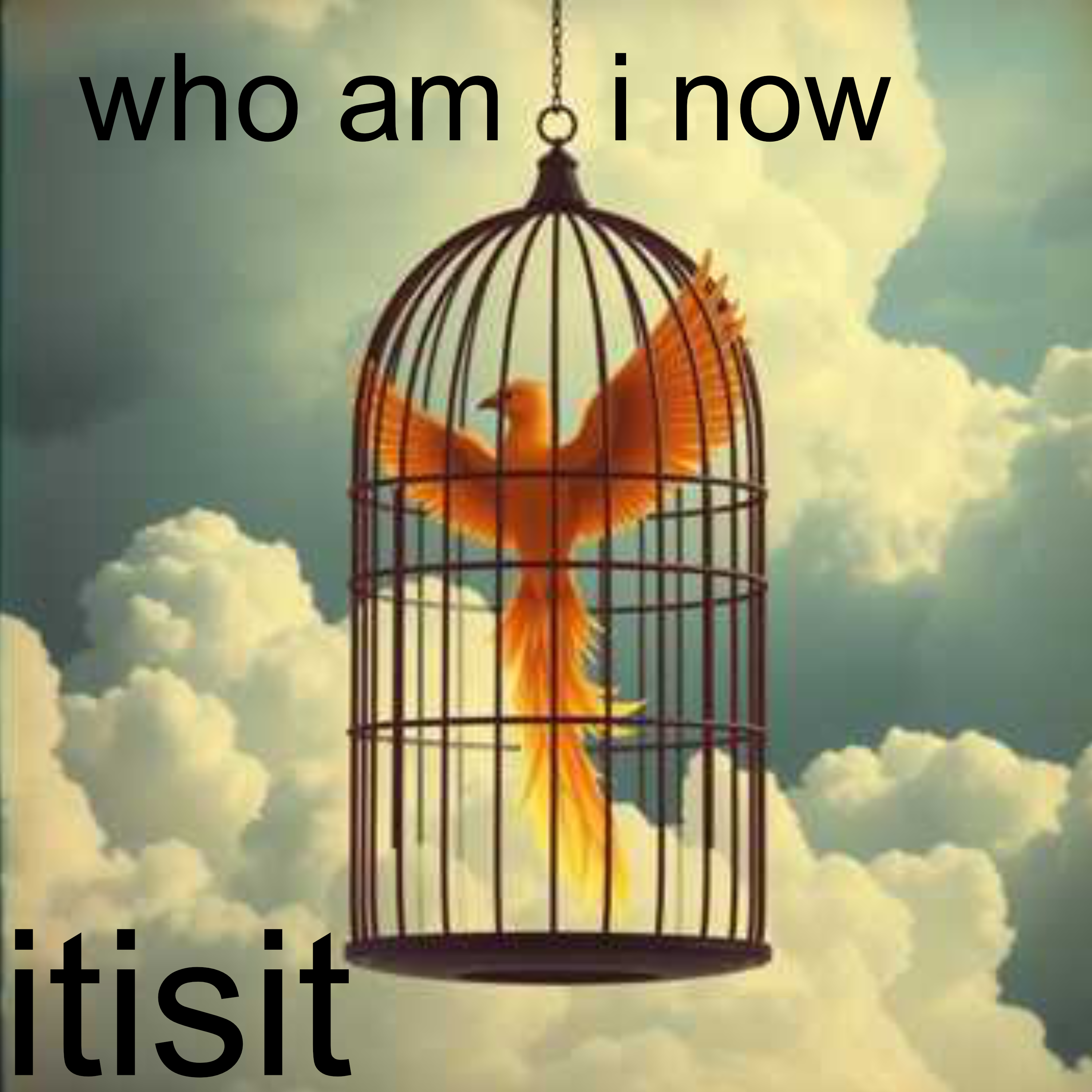
Who Am I Now
A searching song about masculine identity, changing roles and the courage to live more honestly.


"Is it fists in the air, or a heart that bleeds?" — Who Am I Now
Put a man in front of these two images — fists raised, or a heart openly hurting — and ask which one is strength, and most will hesitate. Not because neither counts, but because both genuinely do, and picking one as the "real" version of strength has never actually been necessary.
Raised fists, gritted teeth, powering through — this version of strength shows up constantly in how men are taught to see themselves, from sport to work to how a "tough" moment gets portrayed. It's not fake. It's just not the whole picture, even though it often gets treated as the entire definition.
Staying open, letting something hurt without immediately shutting it down, admitting an injury before it festers — this takes real effort, arguably more than gritting through, but it almost never gets called strong in the same breath. It gets called sensitive, or soft, or "a lot," which quietly discourages it.
The line doesn't actually demand a choice — it presents both and lets the tension sit. A man doesn't have to decide once and for all which kind of strength he is. Different situations call for different ones, and needing both isn't a contradiction, it's just being a complete person.
There's a song called Who Am I Now that holds this exact tension without resolving it too fast. You can hear it here: https://imale.com.au/listen/who-am-i-now
A searching song about masculine identity, changing roles and the courage to live more honestly.
Most men have a working definition of strength they've never had to state out loud, absorbed rather than examined. This piece looks at the competing definitions rarely named as competing, and what it takes to actually ask the question.
Read Story
A lot of men hit a moment — after a job loss, a divorce, kids moving out — where the mirror doesn't match who they thought they were. This piece looks at why roles do so much identity work for men, and what the gap actually means.
Read Story
Provider and protector didn't get chosen by most men — they got inherited, carved in before there was much say. This piece looks at why "love asks for more" isn't a criticism, and why equal partner is a harder role to choose than it sounds.
Read Story
Most men already agree, in the abstract, that the old model of stoic self-sufficiency doesn't quite fit anymore. What's missing is seeing the alternative modelled up close, often enough, to feel like a real option. This piece looks at why admission has to come before strength, not after.
Read Story
By the time most men are old enough to question "stand tall, never let it show," they've already been following it for a decade. This piece traces how the instruction gets absorbed rather than taught, and separates two rules that were never actually one.
Read Story