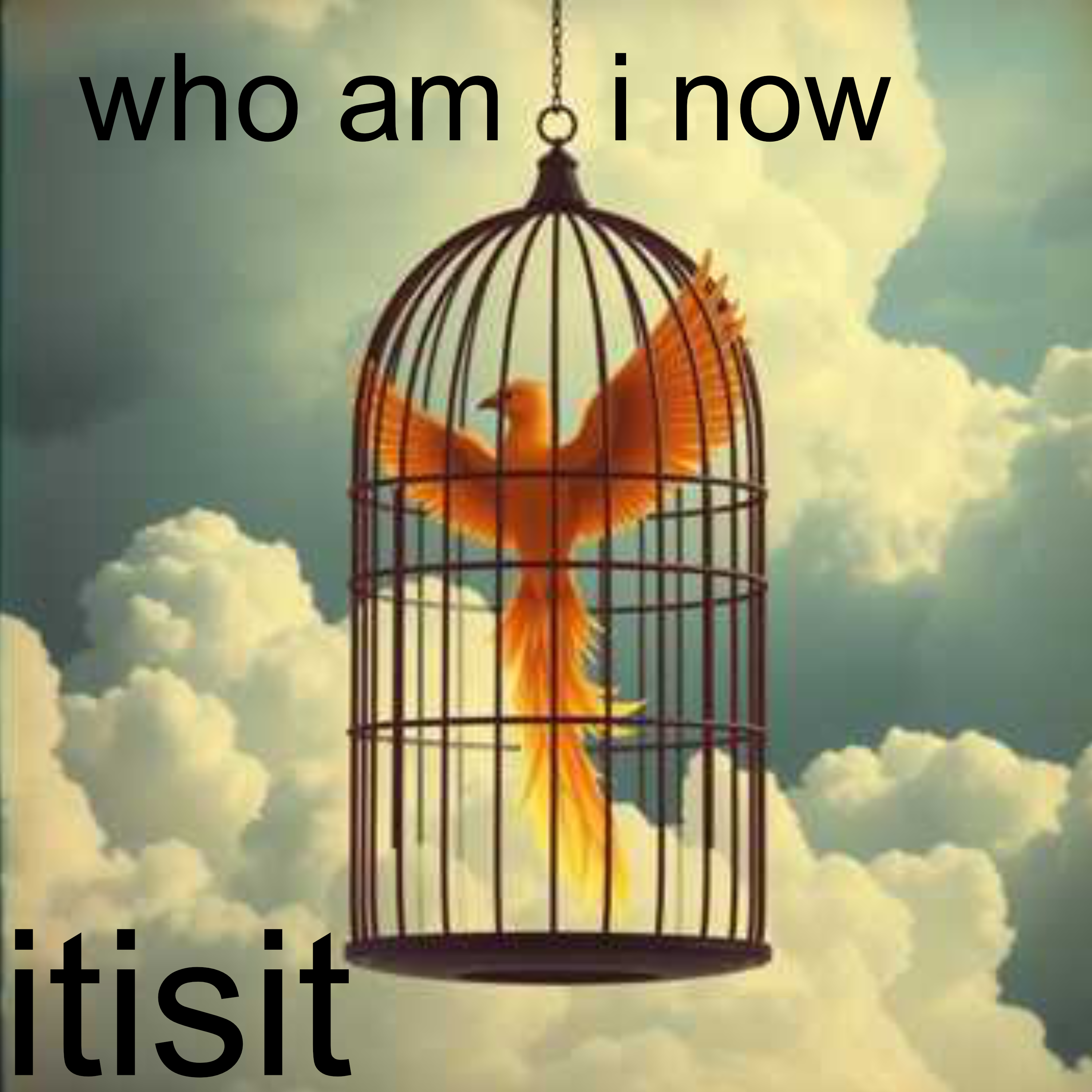
Who Am I Now
A searching song about masculine identity, changing roles and the courage to live more honestly.


"I'm breaking the cage, I just want to be me" — Who Am I Now
There's a version of "breaking free" that gets imagined as dramatic — walking out, blowing everything up, rejecting everyone and everything at once. That's rarely what it actually looks like for most men. Mostly it looks like quietly deciding to stop performing a version of yourself that was never really true, one small decision at a time.
Nobody can see the cage a man's built his life around — it's made of expectations, habits, and roles that look completely normal from the outside because everyone else is living inside a similar one. That's part of why breaking it doesn't look like a scene. It looks like small, quiet refusals nobody else even notices.
This isn't a demand for radical reinvention. It's a much more modest request — to be allowed to be whoever's actually underneath the performance, rather than required to keep performing a role that's stopped fitting. That's a smaller ask than it sounds, and also somehow a harder one to make.
Breaking a cage built over decades doesn't happen in one decision. It happens in dozens of smaller ones — saying what you actually think in a meeting, admitting you don't want to do the thing everyone assumes you want to do, letting a mate see you struggle. Each one on its own looks minor. Together, they add up to something real.
There's a song called Who Am I Now that names this exact process — breaking the cage, quietly, in order to just be yourself. You can hear it here: https://imale.com.au/listen/who-am-i-now
A searching song about masculine identity, changing roles and the courage to live more honestly.

Fists raised, or a heart openly hurting — both count as strength, even though only one usually gets called that out loud. This piece looks at why the bleeding-heart version rarely gets named as strength, and why the question doesn't need a single answer.
Read Story
Most men have a working definition of strength they've never had to state out loud, absorbed rather than examined. This piece looks at the competing definitions rarely named as competing, and what it takes to actually ask the question.
Read Story
A lot of men hit a moment — after a job loss, a divorce, kids moving out — where the mirror doesn't match who they thought they were. This piece looks at why roles do so much identity work for men, and what the gap actually means.
Read Story
Provider and protector didn't get chosen by most men — they got inherited, carved in before there was much say. This piece looks at why "love asks for more" isn't a criticism, and why equal partner is a harder role to choose than it sounds.
Read Story
Most men already agree, in the abstract, that the old model of stoic self-sufficiency doesn't quite fit anymore. What's missing is seeing the alternative modelled up close, often enough, to feel like a real option. This piece looks at why admission has to come before strength, not after.
Read Story
By the time most men are old enough to question "stand tall, never let it show," they've already been following it for a decade. This piece traces how the instruction gets absorbed rather than taught, and separates two rules that were never actually one.
Read Story