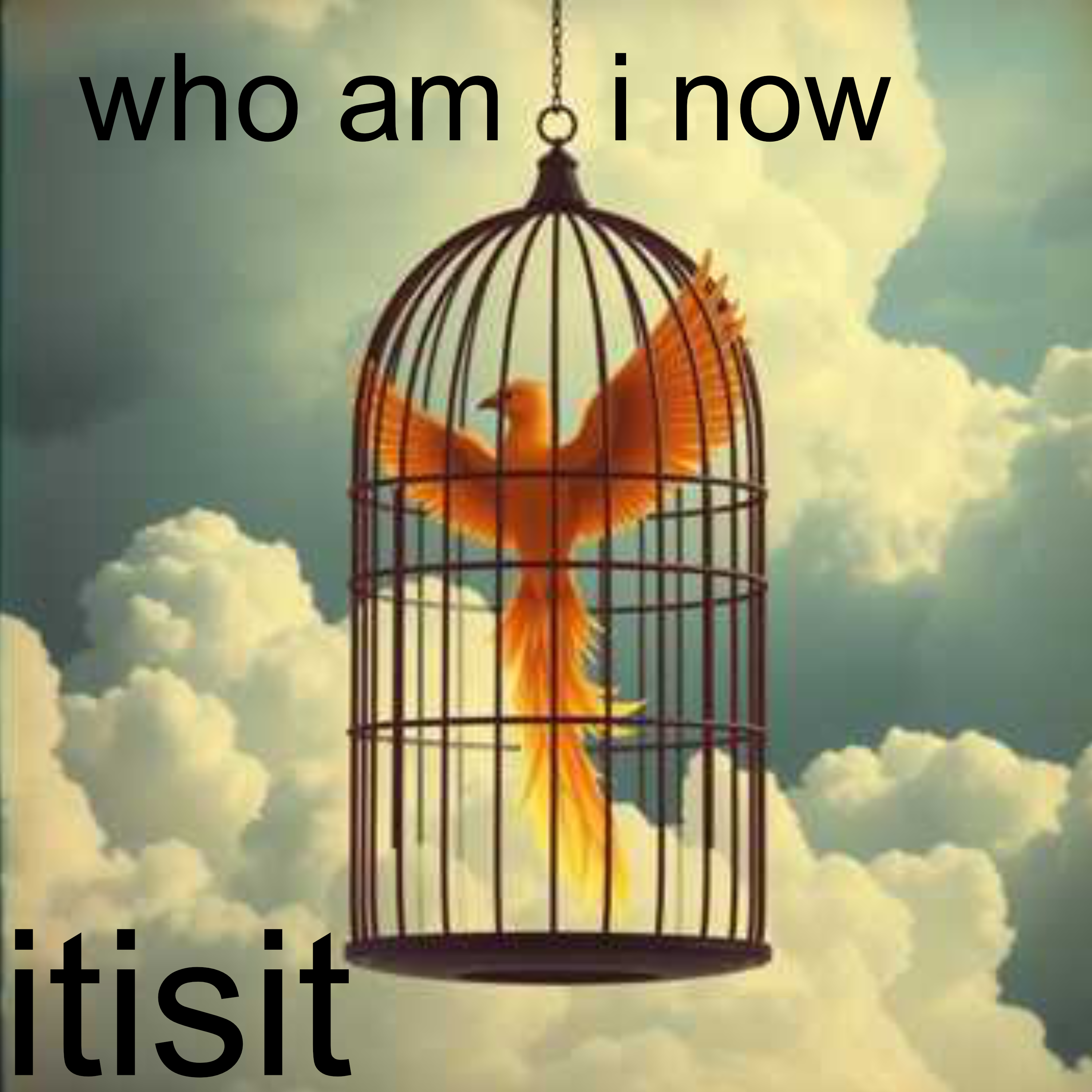
Who Am I Now
A searching song about masculine identity, changing roles and the courage to live more honestly.


"The old script whispers, hold the line, but I hear new voices crossing mine" — Who Am I Now
For a long time, most men only really heard one voice in their head about how to handle themselves — the old script, telling them to hold the line, stay composed, keep it together. This line describes something newer: a second voice, crossing the first one, saying something different.
The old voice — hold the line, don't show it — doesn't disappear once a man starts hearing an alternative. It keeps whispering, same as always. What changes is that it's no longer the only voice in the room, which means it's no longer automatically obeyed by default.
The new voices crossing the old script tend to come from unexpected places — a mate who finally said something honest first, a partner who modelled a different way of handling a hard moment, sometimes just enough years of watching the old script fail to produce the results it promised. Nobody hands this over in a lesson; it gets picked up sideways.
Hearing two competing instructions doesn't resolve neatly — a man doesn't wake up one day having fully switched from one to the other. Most of the real living happens in the overlap, where both voices are audible and a choice gets made anyway, case by case, without a clean final answer.
There's a song called Who Am I Now that puts these two voices side by side without picking a winner too quickly. You can hear it here: https://imale.com.au/listen/who-am-i-now
A searching song about masculine identity, changing roles and the courage to live more honestly.

Taking off armour sounds like it should leave a man exposed and diminished. This piece argues the opposite — what's released isn't weakness, it's the truth that was underneath the whole time, and it doesn't cost the capability people fear losing.
Read Story
"Breaking free" gets imagined as dramatic, but for most men it looks like quietly deciding to stop performing a version of yourself that was never true. This piece looks at why the cage is invisible from the outside, and why this takes longer than people expect.
Read Story
Fists raised, or a heart openly hurting — both count as strength, even though only one usually gets called that out loud. This piece looks at why the bleeding-heart version rarely gets named as strength, and why the question doesn't need a single answer.
Read Story
Most men have a working definition of strength they've never had to state out loud, absorbed rather than examined. This piece looks at the competing definitions rarely named as competing, and what it takes to actually ask the question.
Read Story
A lot of men hit a moment — after a job loss, a divorce, kids moving out — where the mirror doesn't match who they thought they were. This piece looks at why roles do so much identity work for men, and what the gap actually means.
Read Story
Provider and protector didn't get chosen by most men — they got inherited, carved in before there was much say. This piece looks at why "love asks for more" isn't a criticism, and why equal partner is a harder role to choose than it sounds.
Read Story
Most men already agree, in the abstract, that the old model of stoic self-sufficiency doesn't quite fit anymore. What's missing is seeing the alternative modelled up close, often enough, to feel like a real option. This piece looks at why admission has to come before strength, not after.
Read Story
By the time most men are old enough to question "stand tall, never let it show," they've already been following it for a decade. This piece traces how the instruction gets absorbed rather than taught, and separates two rules that were never actually one.
Read Story